Sigenergy SigenStor review, from an installer

By Daniel Carmont, licensed electrical contractor Lic# 92489
Nuvolt Electrical Solutions · 22 August 2026 · 7 min read
Sigenergy is the newest name in this series and it has risen faster than anything I have seen in this trade. The company was founded in 2022 by the people who previously ran Huawei's solar inverter business, and within about three years it was one of the best selling home battery brands in Australia.
I am a licensed electrical contractor on the Sunshine Coast (Lic# 92489) and an accredited solar installer. Here is what the SigenStor actually is, what it does better than anything else, and the tradeoffs worth knowing before you commit.
What SigenStor actually is
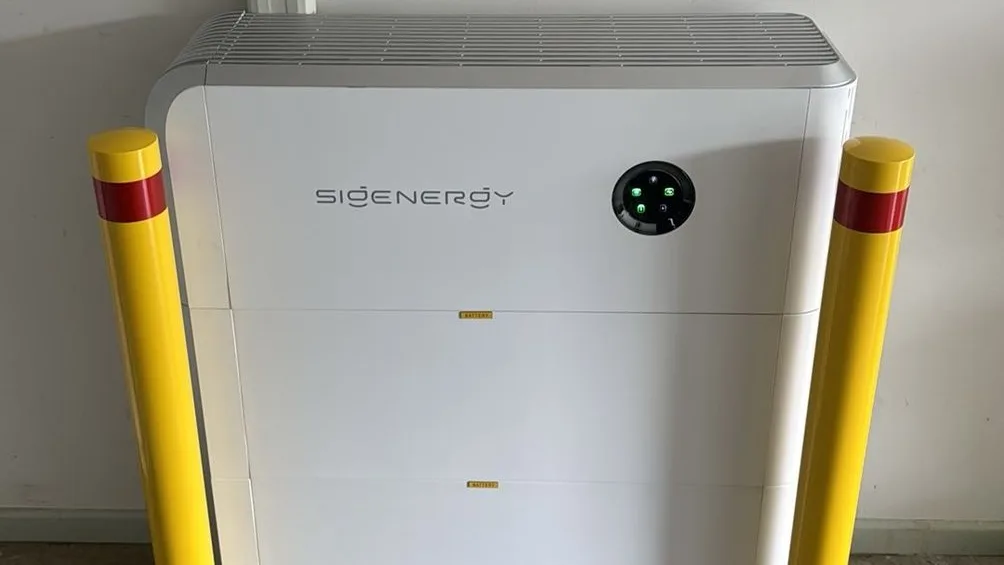
SigenStor is marketed as five things in one, and the marketing is unusually close to the truth. What you are actually buying is a vertical rack that several separate units clip into.
At the top sits the Sigen Energy Controller, which is the hybrid inverter, the power conversion and the energy management system in a single box. Below it sit battery modules, one to six of them per controller. You can also drop in a DC EV charging module on the same rack, and there is a separate wall mounted Gateway box if you want whole home backup.
The modules connect with quick connectors and no separate DC wiring between them. That sounds like a small thing and it is not: it is why the install is quick, why commissioning is quick, and why adding a module later is genuinely straightforward rather than a rewire.
You can start with one module and grow, and mixed module sizes are supported in the same stack.
The numbers worth checking
Two battery modules are offered. The BAT 5.0 gives 5.2 kWh usable at about 55 kg, and the BAT 8.0 gives 7.8 kWh usable at about 70 kg. Both measure roughly 767 by 270 by 260 mm and both are rated IP66, which is at the top of the range for this class and gives you more freedom about where the stack goes.
The Energy Controller comes single phase from 5 kW to 12 kW, and three phase from 5 kW right up to 30 kW, which is one of the broadest three phase ranges available for a residential product. Peak efficiency runs to around 98 percent.
Now the number nobody puts in the brochure. A full six module stack of the larger battery is about 467 kg and just under two metres tall. That is not a wall unit. That is a floor standing appliance the weight of a small car engine, and it needs a proper slab, proper clearance and a sensible location decided before anything is ordered.
Integrated EV charging, which nothing else here does
This is the genuinely distinctive feature and the reason to shortlist it.
The DC EV charging module drops into the same stack as the battery and the controller. No separate wall charger, no second isolation point, no additional switchboard run to the garage wall. The car charges directly from DC, which avoids a conversion step.
Nothing else in mainstream residential storage does this today. If you have an electric vehicle, or you are about to, that integration is a real argument, and it changes the total cost comparison against buying a battery and a separate charger.
Worth knowing at quote stage: the EV charging module carries a 3 year warranty, against 10 years on the battery and the controller. That is not unreasonable for a charging product, but it is a different number and you should know it going in. If you would rather keep charging separate, our EV charger installation page covers the conventional approach.
The honest tradeoffs
Whole home backup needs the Gateway. Unlike the GoodWe ESA, where the bypass is built into the unit, SigenStor needs the separate Gateway box for whole home backup. It is an extra unit, an extra cost and extra space. Sigenergy publish a quick load side changeover with the Gateway fitted, which is good, but the box is not optional to get there. If you are comparing quotes, make sure the Gateway is in the one that promises whole home backup.
Keep it connected to the internet. The system is managed and updated over the network, and firmware and manufacturer notices reach it that way. Sigenergy's warranty terms lean on the system being reachable. Practically: do not install it and then let the wifi lapse. That is good advice for any connected system and it matters more here than most.
It is a young company. Founded in 2022, listed in 2026. The product is excellent and the people behind it have deep credentials from Huawei's solar business, but a ten year warranty is a promise from a company, and this is the shortest track record in this series. That is not a reason to avoid it. It is a reason to weigh it consciously rather than assume all ten year warranties are equal.
The app is the best in the category, which sounds like a soft benefit until you own a system for a decade and use it every week.
Who I would put one in for
The EV owner, or the about to be EV owner, first. The integrated charging is a real differentiator and it is the clearest case.
After that, anyone who wants a modular system they can start small and grow, who has the floor space and a slab for it, and who values a genuinely good monitoring app.
I would steer you elsewhere if you want the cheapest possible path to whole home backup, because the Gateway adds a box the GoodWe does not need, and if your install location cannot take a heavy floor standing stack. On sizing the stack sensibly rather than by the biggest number on the price list, see what size home battery you actually need.
Common questions
Can a Sigenergy SigenStor charge an electric car directly?
Yes. A DC EV charging module drops into the same stack as the battery and the energy controller, so you do not need a separate wall charger or a second switchboard run to the garage. Nothing else in mainstream residential storage currently offers this. The charging module carries a 3 year warranty against 10 years on the battery and controller.
Does SigenStor need extra equipment for blackout backup?
For whole home backup, yes. It needs the separate Sigen Gateway box, which is an extra unit, cost and space. With the Gateway fitted the changeover is quick, though not instant. When comparing quotes, check the Gateway is actually included in any quote promising whole home backup.
How much does a full Sigenergy battery stack weigh?
A full six module stack of the larger 8.0 module is around 467 kg and just under two metres tall. Individual modules are about 55 kg to 70 kg, so each is a two person lift. It is a floor standing installation that needs a proper slab and clearance, decided before ordering.
How much usable capacity do Sigenergy battery modules hold?
The BAT 5.0 holds 5.2 kWh usable and the BAT 8.0 holds 7.8 kWh usable. Both are rated IP66, which is at the high end for this class and gives more freedom about siting. Mixed module sizes are supported in the same stack.
Ask us about your place
Tell us what you have and what you are after. You get a written quote from the licensed contractor who does the work, and we reply within 2 hours during business hours. If it is urgent, call 0494 826 740.