SolaX battery review, from an installer

By Daniel Carmont, licensed electrical contractor Lic# 92489
Nuvolt Electrical Solutions · 22 August 2026 · 7 min read
SolaX is the brand in this series with the longest hybrid inverter heritage. They built Asia's first hybrid inverter back in 2013, well before combining solar and storage in one box was normal, and they have been in Australia since the middle of that decade.
I am a licensed electrical contractor on the Sunshine Coast (Lic# 92489) and an accredited solar installer. This is the practical review: where SolaX earns its place, the number you have to ask for, and who it is genuinely right for.
The range, and the number you must ask for
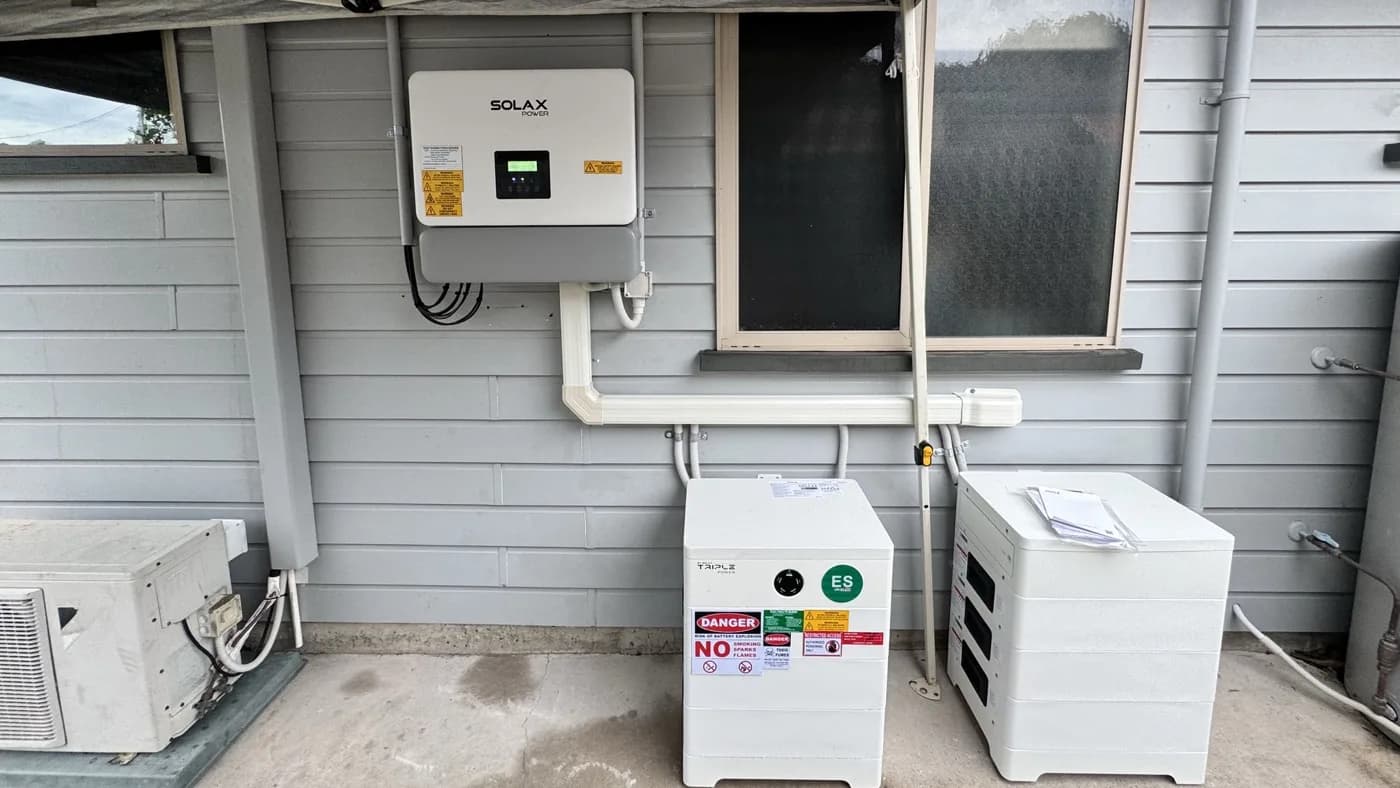
The current stacks are lithium iron phosphate, floor mounted, and modular. The mainstream stack uses a 3.6 kWh module at about 34 kg, taking two to thirteen modules. The larger, newer stack uses a 5.1 kWh module at about 46 kg and scales considerably higher.
Now the important part, and I would rather you heard it from me than discovered it on a comparison spreadsheet. SolaX quote 90 percent depth of discharge. The headline capacity is nominal, and usable is about 90 percent of it.
In real numbers, a stack advertised at 47.9 kWh gives you 43.1 kWh usable. On the larger stack, a headline 66.5 kWh gives about 59.8 kWh usable.
That is not a criticism. It is a completely normal engineering choice and holding back a reserve is part of why lithium iron phosphate cells last. But it means you must compare usable against usable across brands, and it matters doubly because the federal battery discount is calculated on usable capacity. If a quote only gives you the big nominal number, ask for the usable one before you compare it to anything.
Both current stacks include integrated aerosol fire suppression, and are rated for well over 6,000 cycles.
The warranty term that is genuinely better than most
This is the detail I would put at the top of the SolaX case, and it gets almost no attention.
Most ten year battery warranties in this market run to whichever comes first, ten years or a total energy throughput allowance. Cycle the battery hard enough and you can exhaust the throughput before the decade is up.
SolaX's Australian warranty terms specify unlimited cycles where the battery is used for ordinary self consumption and backup. The throughput table applies to other applications, such as energy trading. For a household that charges from its own solar every day and discharges every evening, that is a meaningfully better promise than a capped throughput warranty, and it is worth reading side by side with the alternatives.
The headline retention figure is the usual one: 70 percent of original capacity at ten years. Read your own warranty document rather than my summary of it, because these terms are revised, but the unlimited cycle provision for self consumption is a real and unusual advantage.
One condition to note going in: adding modules to an existing stack is straightforward within the first year, and beyond that generally needs the manufacturer's agreement so the new modules can be voltage matched. If future expansion is part of your plan, say so at quote stage and get it documented.
The retrofit path for a house that already has solar
Here is where SolaX solves a problem some competitors simply do not address.
If you already have a working solar system with a perfectly good inverter, adding most batteries means replacing that inverter with a hybrid one. You are throwing away a functioning asset to gain storage, and it is a large part of why battery retrofit quotes come back higher than people expect.
SolaX make AC coupled retrofit inverters that sit alongside your existing solar rather than replacing it. Your current inverter keeps doing its job and the battery is added beside it. On the right house that is a cleaner, cheaper and less wasteful path.
It is not automatically the better answer. AC coupling has a small extra conversion loss, and on some homes replacing an ageing inverter with a hybrid is genuinely the right call anyway. But it should be priced both ways, and an installer who never offers you the retrofit option is not showing you the whole picture.
Where it suits, and where it does not
It suits you if you are adding storage to existing solar and want the retrofit path priced properly, if you cycle your battery hard every day and value the unlimited cycle provision, and if the install location is tight.
That last point is underrated. At about 34 kg, the smaller SolaX module is the lightest in this series by a clear margin, and the stack is narrower than most. On a house where the only sensible spot is a side passage rather than a garage, that difference decides whether the job is possible at all.
It suits you less if you want whole home backup at the lowest cost. The hybrid inverters have a built in emergency supply output with a fast changeover, but it feeds selected essential circuits by default. Whole home backup needs an additional box, so if that is your goal, get it quoted explicitly and compare against systems that include it.
It suits you less for a genuinely off grid property, where a purpose built off grid system is the right tool. Our off grid page covers that properly.
As with every battery in this series, the honest advice is to size it around your real evening consumption rather than the biggest number available. That is what what size home battery you actually need is for.
Common questions
Is the advertised SolaX battery capacity the usable capacity?
No. SolaX quote 90 percent depth of discharge, so the headline figure is nominal and usable is around 90 percent of it. A stack advertised at 47.9 kWh gives about 43.1 kWh usable. Always ask for the usable figure, because that is what runs your house and what the federal battery discount is calculated on.
Does the SolaX warranty limit how often I can cycle the battery?
For ordinary self consumption and backup, the Australian warranty terms specify unlimited cycles, with the throughput table applying to other applications such as energy trading. That compares favourably with warranties that end at whichever comes first, ten years or a throughput allowance. Read the current warranty document, as terms are revised.
Can I add a SolaX battery without replacing my existing solar inverter?
Yes. SolaX make AC coupled retrofit inverters that work alongside an existing solar system rather than replacing the inverter. On the right house that is cheaper and less wasteful than a hybrid replacement, though it carries a small extra conversion loss. Ask for both options to be priced.
Will a SolaX system run my whole house in a blackout?
Not by default. The hybrid inverters include an emergency supply output with a fast changeover, but it feeds selected essential circuits. Whole home backup requires an additional box, so if that is your goal have it quoted explicitly and compare the total against systems with the bypass built in.
Ask us about your place
Tell us what you have and what you are after. You get a written quote from the licensed contractor who does the work, and we reply within 2 hours during business hours. If it is urgent, call 0494 826 740.