Solar Panel Cleaning on the Sunshine Coast
Your panels washed properly, the leaf litter cleared out from under them, and your whole system checked over by a licensed electrician while we are up there. Most people pay for a wash. You get the wash and the inspection.

SAA S6093214
MEA member 23598 · QLD licence 92489
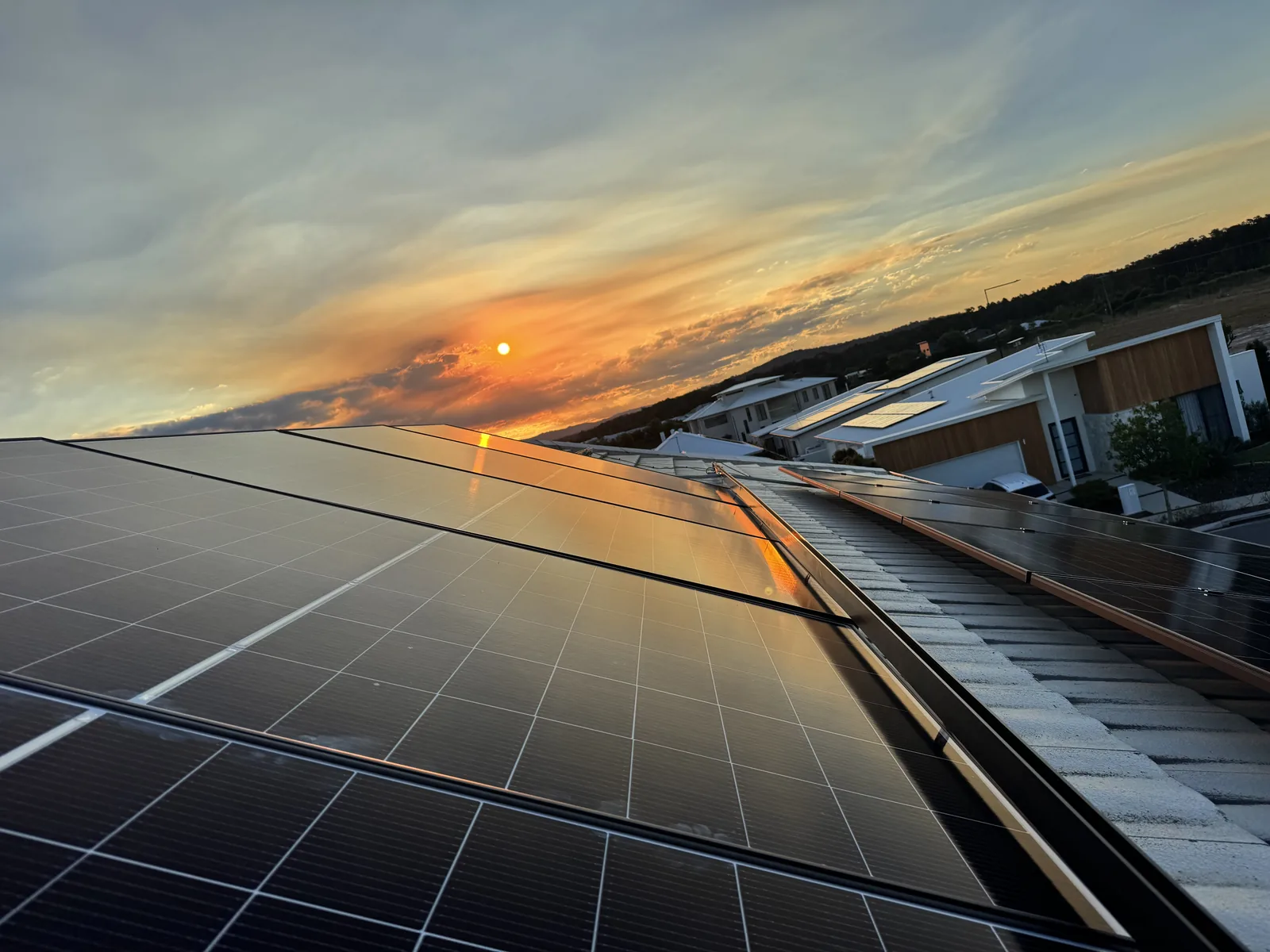
Nuvolt Electrical Solutions cleans solar panels across the Sunshine Coast, from Caloundra to Noosa and the hinterland, and a licensed electrician (QLD Lic 92489) checks the whole system while we are on the roof: isolators, connectors, the inverter's fault history and anything nesting under the array.
Solar panels are the only appliance you own that you buy, put on the roof, and then never look at again. They sit up there for twenty years in Queensland sun, salt air, dust, pollen and gum leaves, quietly making less power every year while nobody notices, because nobody is watching a number that only ever goes down slowly. Cleaning them fixes that, and it is worth doing. But a bloke with a hose can wash a panel. What a bloke with a hose cannot do is tell you the isolator on your roof has water in it, or that a connector is arcing, or that your inverter has been throwing the same fault for eight months. So we do both in the one visit: the clean, and a proper health check on the system underneath it.
The Clean, and Then the Bit Nobody Does
One visit, two jobs. We get the glass clean and the roof clear, then we check the system that sits behind it.
The panels themselves
Washed with purified water and soft brushes, worked from the roof surface rather than on the panels. No high pressure washers, no detergents, no abrasives, and never in the middle of a hot day. That is not fussiness. Cold water hitting hot glass can crack it, pressure washers drive water past the frame seals, and standing on a module puts microcracks through cells you cannot see until the output drops.
Under and around the array
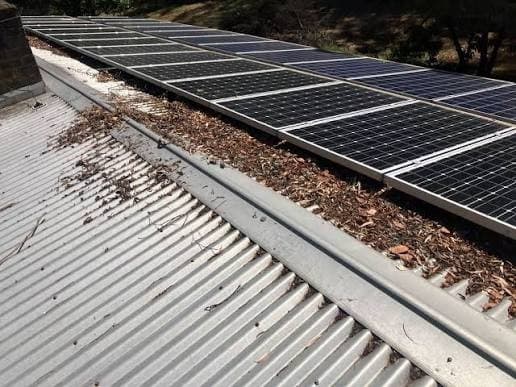
The leaf litter, bark and gum nuts that bank up between the panels and the roof sheet get cleared out. That pile is the part most people never see and it is doing three things at once: holding moisture against your roof, blocking the airflow that keeps panels cool and efficient, and sitting there as dry fuel directly underneath live DC cabling.
Bird and pest damage
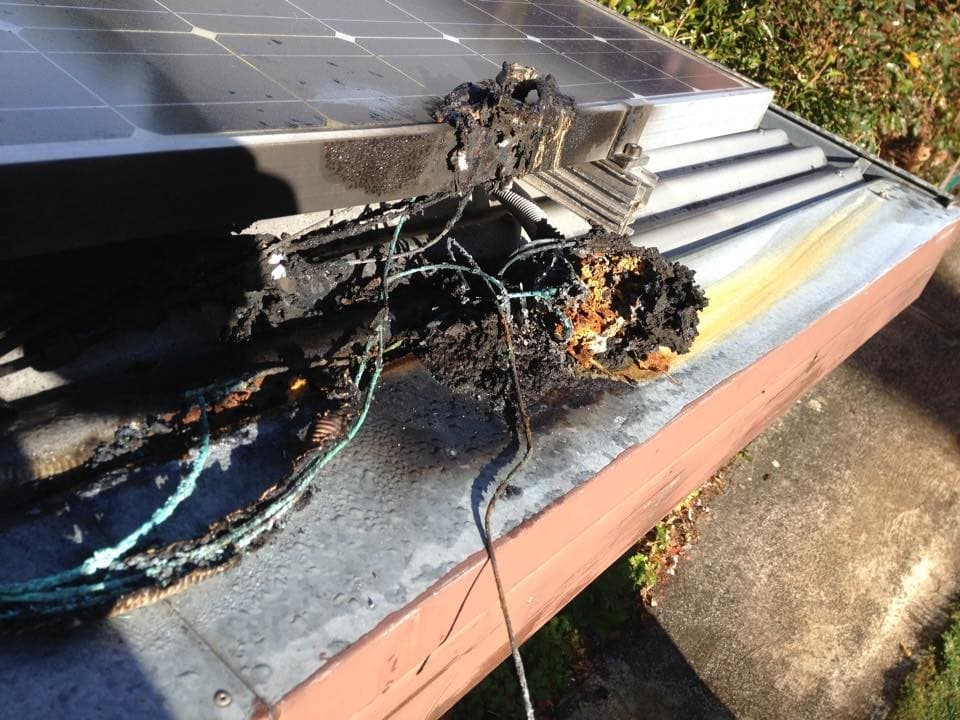
Pigeons and possums love the gap under an array. Droppings shade cells and bake on hard, nests block airflow completely, and rodents chew cable insulation, which is a genuine fire and shock risk on a DC circuit that is live every daylight hour. We clear what is there, flag what has been chewed, and can quote bird proofing mesh if the gap needs closing.
The system health check
This is the part you cannot buy from a cleaning company. While we are up there we check the DC isolators, the connectors, the cable support and UV damage, the mounting and roof penetrations, the earthing, and then the inverter fault history and what it is actually producing against what it should be. You get it in writing.
This Is What We Find Up There
Both of these are from jobs on Queensland roofs. Neither homeowner knew anything was wrong, because from the ground everything looked completely normal.
What We Actually Look At
Cleaning gets you the output back. The inspection is what stops a small fault becoming an expensive one, and it is included every time:
- DC isolators, roof and inverter: seals, water ingress, corrosion, heat damage and signs of tracking
- MC4 connectors and plugs, for the mismatched or unmated pairs that are a classic arcing point
- DC and AC cabling: UV perished insulation, failed cable ties, cable resting on the roof sheet, rodent damage
- Panel frames, clamps, rails and roof penetrations, plus any flashing that has started to let go
- Earthing and bonding on the array and the mounting system
- Inverter fault log, error history and current output measured against what the system should be doing
- Physical panel condition: cracked glass, delamination, browning cells and visible hot spots
- A written report with photos of anything we find, and a clear answer on what needs doing and what does not
Dealing directly with a licensed contractor (Lic# 92489), not a call centre or a commission salesperson.
Australian owned and operated. Local crew on the Sunshine Coast. No overseas call centres.
Why dirty panels cost more than you would think
A film of dust costs you a few percent. That is annoying but survivable. The expensive version is partial shading: one bird dropping, one gum leaf, one patch of lichen sitting on a single cell. A shaded cell stops producing and starts behaving like a resistor with the rest of the string pushing current through it, so it heats up. That is a hot spot, and a hot spot does permanent damage to the module, not temporary damage to your bill. Losses of five to twenty percent are common on a neglected system depending on where you live, and homes near the coast, near bushland, on gravel roads or under trees sit at the wrong end of that range.
Please do not do this yourself
Every year people fall off roofs cleaning solar panels, and it is a long way down onto concrete. Beyond the fall, the common DIY mistakes all cost real money: walking on modules puts invisible microcracks through the cells, a pressure washer forces water past the frame seal and into the laminate, household detergents leave a film that attracts more dirt than it removed, and cleaning at midday can thermal shock hot glass into cracking. Most manufacturers also expect the system to be maintained sensibly, and damage you caused yourself is not a warranty claim. It is not worth it.
Booked, Cleaned & Checked
Get in Touch
Tell us roughly how many panels you have, the roof type and how tall the house is. That is enough for us to give you a price for the clean and health check up front.
Safe Access
We turn up with proper roof access and harnesses. No leaning off a ladder, no shortcuts, and no walking on your panels while we work.
Clean and Inspect
Panels washed, litter and nesting cleared from under the array, then the full electrical health check on isolators, connectors, cabling, mounting and inverter.
Report Back
A written report with photos of anything worth knowing about, plus your before and after production so you can see what the clean actually gave you back.
Solar Cleaning Questions
The things people ask before booking a clean, answered straight by a licensed electrician and accredited installer.
How often should solar panels be cleaned?
For most Sunshine Coast homes, once every twelve to eighteen months is about right. Go annually or more often if you are near the beach and getting salt build up, under gum trees dropping leaves and sap, near a gravel road or building site, on a farm, or if you have a bird problem. Panels on a flat or low pitch roof also need it more often, because rain does not run off hard enough to self clean them.
Does rain not just clean them for me?
Rain helps and it is why panels do not need cleaning every month. What it does not shift is the stuff that actually costs you output: baked on bird droppings, lichen, tree sap, salt film, and the fine dust that dries into a haze. It also does nothing at all for the leaf litter piled up under the array, which is the half of the job that matters most and the half nobody looks at.
How much output will I get back?
Honestly, it depends entirely on how dirty they are. A system that has been rained on regularly and has no shading might gain a couple of percent, which is not much. A system with bird droppings, lichen or a litter pile under it can gain a great deal more. We measure production before and after so you get the real number for your roof rather than a sales figure.
Why does an electrician clean panels, and not a cleaning company?
Because half of what is worth finding on a solar roof is electrical, and a cleaner is not licensed to look at it, let alone touch it. A rooftop array is a live DC circuit every daylight hour, at a few hundred volts, and it has no off switch. We are a licensed Queensland electrical contractor (Lic# 92489) and an accredited solar installer, so we can inspect the isolators, connectors, cabling and inverter properly and act on what we find on the spot.
What if you find something wrong?
We tell you, with photos, in writing, and we separate what is urgent from what can wait. If it is something we can safely make good on the day, we will say so and what it costs before we touch it. If it is bigger, like a failed isolator or an inverter on its way out, you get a written quote and no pressure. Finding faults is the point of the check, not an upsell script.
Will cleaning void my panel warranty?
Cleaning done properly will not. Cleaning done badly absolutely can. Pressure washing, abrasive pads, harsh chemicals and walking on modules are the four that show up in warranty exclusions, which is exactly why we do none of them. Many manufacturers also expect the system to be reasonably maintained, so having a documented clean and inspection on record helps you rather than hurts you if you ever do need to claim.
Can you clean panels on a two storey house?
Yes. We do two storey and steep pitch roofs with proper height safety gear, and there are situations where we will work from the ground with an extended pole system rather than get on the roof at all. What we will not do is take a shortcut on access to save half an hour. If a roof genuinely cannot be worked safely, we will tell you that instead of attempting it.
Do you clean commercial and rural solar?
Yes. Sheds, warehouses, packing sheds and farm arrays are some of the best candidates for regular cleaning, because dust, chaff and bird activity are much heavier on those sites and the systems are big enough that a few percent of lost output is real money. We can set up a scheduled program so it just happens rather than being remembered.
Get Your Panels Cleaned and Your System Checked
One visit from a licensed electrician gets the glass clean, the roof clear and the whole system looked over properly. Tell us your panel count, roof type and how many storeys, and we will come back with a price for the clean and the health check together.
Where we do this
We clean and check solar systems right across the Coast and hinterland, from beachfront homes collecting salt at Caloundra and Maroochydore to properties under the gum trees around Nambour and Beerwah.