Fox ESS is good gear. Here is why some installs give it a bad name
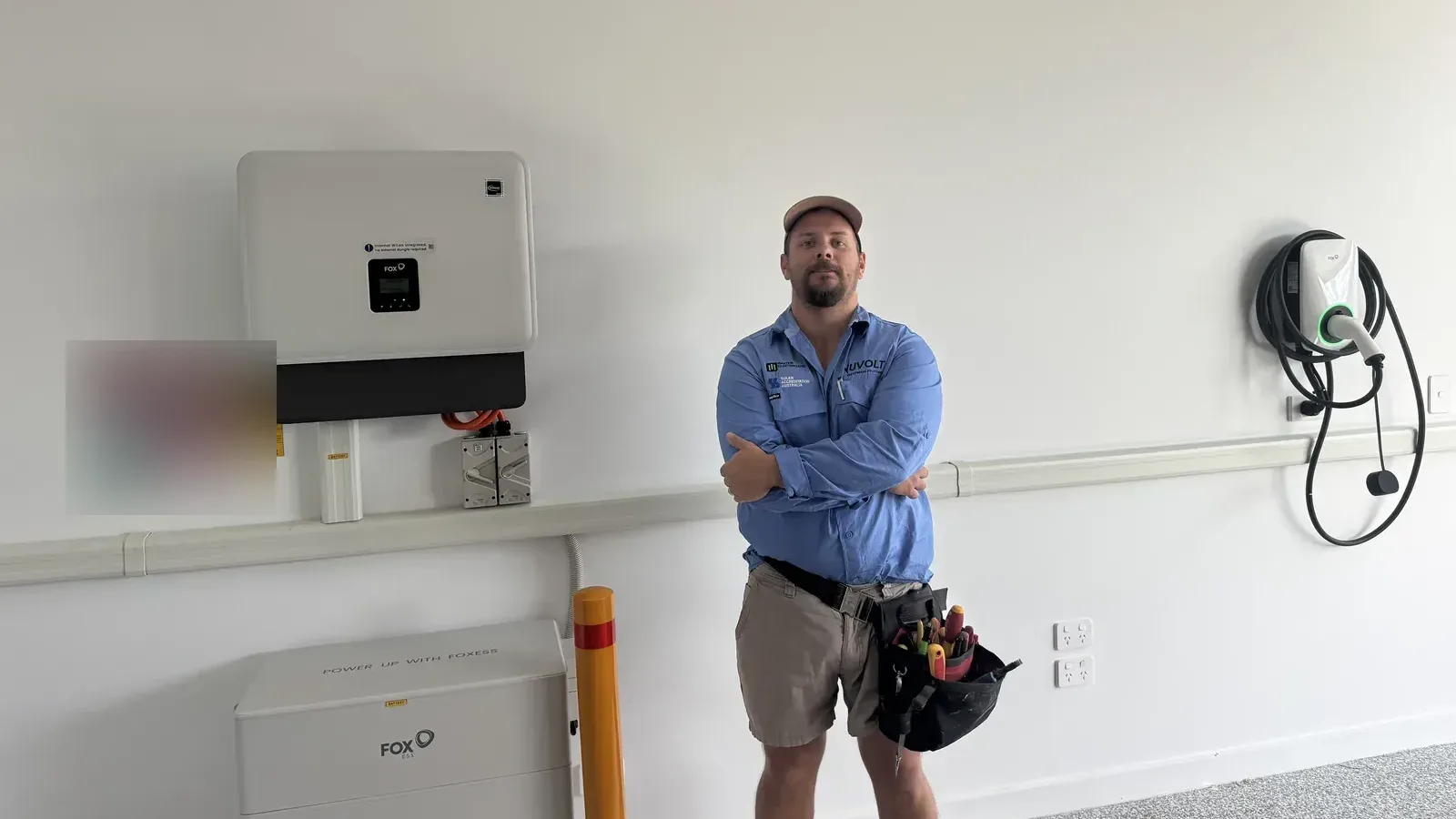

By Daniel Carmont, licensed electrical contractor Lic# 92489
Nuvolt Electrical Solutions · 7 October 2026 · 8 min read
Fox ESS is the brand on more of our installs than any other. I rate the gear, I put it in my customers' garages, and I would not do either if it was rubbish.
I am also the bloke who gets the phone call when one has been put in badly by somebody else, and that call now comes most weeks. Same inverter, same battery, same app. Completely different job.
So this is not a post knocking Fox ESS. It is the opposite. It is about why a good product ends up wearing a bad name, what a rushed install actually looks like, how to tell from the ground whether yours is one of them, and what to do if it is.
Why the best value battery collects the worst installs
Fox ESS is one of the biggest selling home batteries in Australia, and by early 2026 it was being reported as the top seller in the country by storage capacity installed. It got there on value. A stackable battery from a manufacturer that size, at that money, was always going to move.
Price cuts both ways, though. The companies whose whole pitch is being the cheapest quote in your inbox need the cheapest good battery to build that quote around, and since the federal rebate started that has very often been Fox. A cheap quote has to save its money somewhere. It does not save it on the battery, because the battery costs what it costs. It saves it on the hours.
I am not the only one saying it. SolarQuotes ran a piece on exactly this in May 2026 and put it bluntly: "low-priced equipment attracts low-class installation." The same article's verdict on the hardware was that Fox offers "reasonable gear at reasonable prices". Both halves are true, and together they are the whole story.
It is not only Fox, either. The Clean Energy Regulator inspected 1,278 batteries installed under the federal rebate between July 2025 and April 2026, and rated 60.8 percent of those installs substandard and 1.2 percent unsafe. That is every brand. Most of the findings were labelling and the rest was wiring. When six in ten of the installs the regulator looks at are not right, the most popular brand is going to collect the most bad ones. That is arithmetic, not a product fault.
What a rushed install looks like
These are the things I actually find when I am called to a Fox ESS system somebody else fitted. None of them is exotic. Every one of them is what happens when a job priced for one day gets done in half of one.
Cable left out in the open
The battery cables between the stack and the inverter, and the AC cable back to the switchboard, with nothing protecting them: lying loose behind the battery, looped on the floor, or bundled up and held together with tape. Those battery cables carry the full output of the battery at high voltage DC. They have to be properly fixed in place and protected from knocks and damage for the life of the system, not just tidied up where you can see them from the driveway.
Equipment that is not fixed properly
An inverter hanging off fixings that were never going to hold it, or a floor standing stack propped on loose bricks and pavers. A tall battery stack is very heavy and it has to stay exactly where it is for well over a decade. A battery has to be installed the way its manufacturer specifies, including how it is mounted, on a surface strong enough to carry its weight. Following the manual is not optional.
A switchboard left worse than they found it
Covers that no longer fit, a door that will not close, breakers squeezed in wherever there was a gap, and terminations that were never tightened properly. A loose connection carrying battery current runs hot, and heat inside a switchboard is how the expensive problems start. This is the part of a bad install that worries me most, because you cannot see it with the door shut.
Backup with nothing protecting it
The one I find hardest to forgive. When the grid goes down, the backup output of the inverter is the supply to those circuits. It needs its own isolating switch and its own circuit protection, and each circuit it feeds needs a safety switch of a type suited to the inverter. A battery that does not supply backup does not trigger any of that. I have opened boards where the backup supply had neither a breaker nor a main switch of its own.
This is also why so many people discover in the first blackout that their backup does nothing. It was either never installed, or it was installed without the parts that make it work. I go through what proper backup involves in whole home backup vs essential circuit backup.
Labels missing, or written in pen
A battery system has to be signed: at the switchboard and meter box so the next electrician and the fire brigade know a battery is on site, at the battery itself, and with a shutdown procedure where you can find it. This was the single biggest category in the regulator's findings. Those labels have to stay readable for the life of the system, so marker pen that fades or rubs off does not do the job, and it is a fair sign of how the rest of the day went.
Never set up, never registered
The app was never connected, or the metering sensor went on the wrong cable or the wrong way around, so every figure it shows is nonsense and the battery charges and discharges at the wrong times. And the system was never registered with Fox.
That last one matters. Fox's Australian battery warranty terms make registering the product at commissioning a precondition of the warranty. The same terms say warranties should be registered within 36 months of installation, and recommend doing it within six weeks. If nobody did it on the day, it is worth finding that out now rather than in year six.
Why it matters more than how it looks
It is tempting to treat all of that as untidiness. It is not. There are three real costs, and none of them is cosmetic.
Safety. Unprotected cable gets damaged. Loose connections get hot. A backup supply with no protection of its own has nothing to stop a fault on those circuits. And a house with no battery signage gives a firefighter no warning about what is behind the garage door.
Your warranty. Fox's warranty terms, for the inverter and for the battery, do not cover defects caused by improper or non-compliant installation. So a bad install does not just put good gear at risk. It can leave you without cover on that gear when the risk turns up.
What you paid for. A battery running on wrong metering is a battery that charges from the grid when it should be charging from the roof, or sits full while you buy power at the evening rate. You will not get an error message for that. You will just get a bill that never came down the way the quote said it would.
How to check yours from the ground
You can learn a lot about an install without opening anything, and you should not open anything. Stand in front of it with your phone and work down this list. If you take a photo of each item as you go, you have also built exactly what an electrician needs to give you a straight answer.
What to do if yours is one of them
Go back to the installer first, in writing. If the company that fitted it is still trading, the install is their work and putting it right is their job, at their cost. Send the photos, say plainly what is wrong, and keep a copy. They are also the party Fox expects a warranty claim to come through, so it pays to keep that relationship usable if you can.
If they will not come, or cannot be found, get someone who knows the brand. Any licensed, accredited installer can work on the system. What you want is one who fits Fox ESS and knows its manual, because half of this work is knowing what the settings and the wiring are supposed to look like. If the installer has closed down altogether, the warranty side has its own answer, which I cover in what happens to your Fox ESS warranty when your installer is gone.
Get it in writing. Whoever looks at it should hand you a list: what is fine, what has to be fixed now, what can wait, and what they did. That list is worth having for your own peace of mind, and it is worth a great deal if you ever sell the house or make a claim.
This is work we do every week, and it has its own page: Fox ESS repairs and service. The quickest path is a free estimate: upload the photos from the list above through the secure link we send you, and the estimate comes back within 1 business day of receiving them. If something can't be confirmed that way, I'll explain why, and a $299 design visit may be needed, credited back if you go ahead within 30 days.
Would I still put one in
Yes, and I do, every week. A Fox ESS system installed properly is a sound, well priced piece of equipment, and my own review of the battery is here: Fox ESS CQ7 battery review.
The lesson is the one that applies to every brand on the market. The badge on the front matters less than the person holding the screwdriver. If you are still shopping, choose the installer first and the battery second. And if you already own one that was put in badly, the good news is that the expensive part is usually fine. It is the cheap part that needs redoing.
Common questions
Is Fox ESS a good battery?
Yes. It is the brand on more of our installs than any other, and it is one of the biggest selling home batteries in Australia. The problems people report with Fox ESS systems are very often installation problems rather than product faults: exposed cabling, missing labels, backup wired without its own protection and metering that was never set up correctly.
How do I know if my battery was installed properly?
Without touching anything, check that no cable between the battery, inverter and wall is exposed, every cover is on, the battery sits square and solid rather than on loose bricks, the labels are printed and include a shutdown procedure, your switchboard door closes, the app is online with figures that make sense, and you hold a certificate for the electrical work plus confirmation of registration with the manufacturer.
Who is responsible for fixing a badly installed battery?
The company that installed it, at its cost, while it is still trading. Put the problem to them in writing with photos and keep a copy. If they will not return or have closed down, a licensed and accredited installer can inspect it, fix it and certify the work they carry out.
Can a bad install affect my Fox ESS warranty?
It can. Fox ESS Australia's warranty terms for both the inverter and the battery do not cover defects caused by improper or non-compliant installation. The battery terms also make registration at commissioning a precondition of the warranty. Having a poor install corrected by an accredited installer protects your position, though the decision on any claim rests with Fox.
Why did my battery not work when the power went out?
Either backup was never installed, because a battery on its own stores energy but does not run the house in an outage, or backup was installed without everything it needs. Backup requires extra equipment and switchboard work, including an isolating switch and circuit protection for the backup supply, and a suitable safety switch on each circuit it feeds.
Ask us about your place
Tell us what you have and what you are after. You get a written quote from the licensed contractor who does the work, and we reply within 2 hours during business hours. If it is urgent, call 0494 826 740.