Emergency electrician on the Sunshine Coast: what counts, what it costs, what to do first
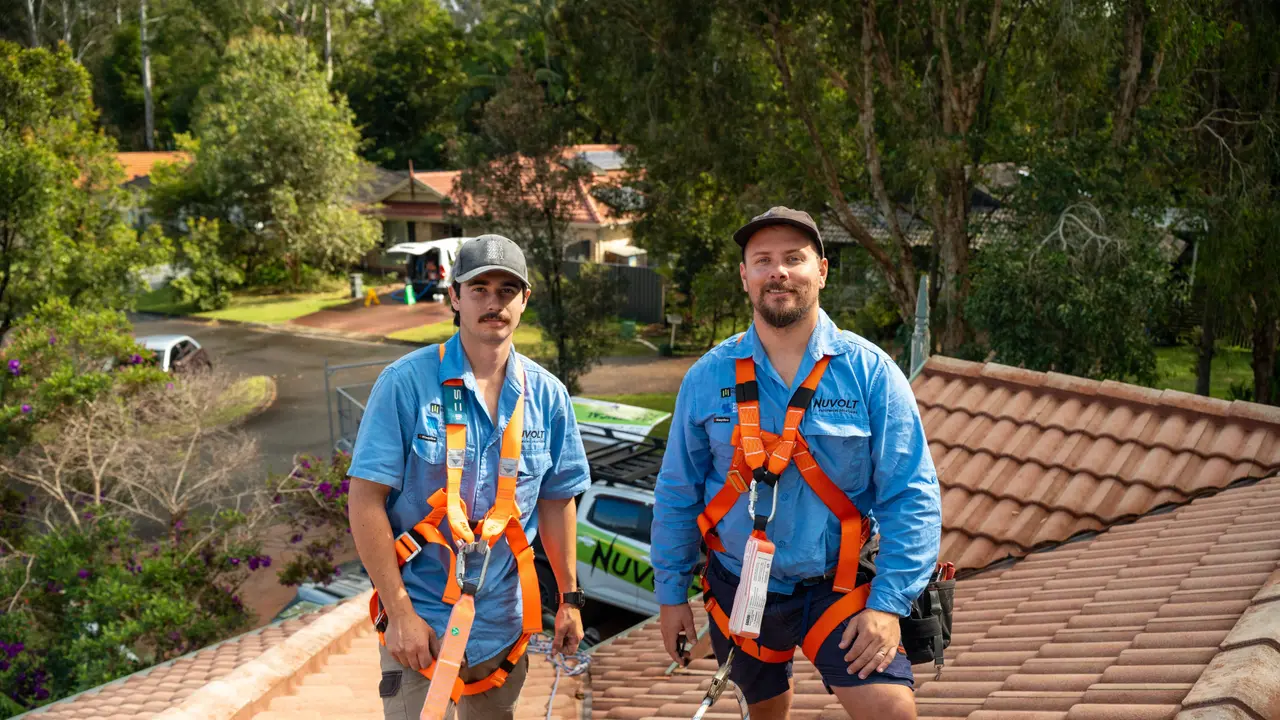

By Daniel Carmont, licensed electrical contractor Lic# 92489
Nuvolt Electrical Solutions · 26 August 2026 · 8 min read
What actually counts as an electrical emergency
I run a licensed electrical contracting business out of Nambour (Lic# 92489), and a fair share of the phone calls that come in after hours are not emergencies. That is not a criticism. Nobody teaches you which electrical problems are dangerous and which are just annoying, and at 9pm with the lights off it all feels the same. So here is the line I use, and I would rather you rang me on the right side of it than lay awake on the wrong side.
Treat it as an emergency, right now, if you can see, smell or feel any of these: sparks or arcing from a switch, outlet or the switchboard; a burning or hot plastic smell you cannot trace to an appliance; smoke or scorch marks around a power point, light fitting or the board; a power point or switch that is hot to touch or discoloured; anyone getting a shock or a tingle from a tap, a shower, an appliance or a metal fixture; exposed or damaged cable you can see copper in; water that has got into the switchboard or into outlets, most often after a storm or a burst pipe; or a safety switch that trips again within seconds of being reset. Every one of those is either a fire waiting to start or a fault that can hurt someone, and both get worse if you leave them.
It is not an emergency, and it will cost you less to book it for the next business day, if: one power point or one light has stopped working and nothing is hot, smelling or sparking; the safety switch trips only when a particular appliance runs, and stays on once that appliance is unplugged; a fan, oven or hot water system has died and you can live without it overnight; or the whole street is dark, because that is a network outage and no electrician can fix it from your house. Knowing the difference is worth real money, because the same fault attended at 10am on a Tuesday and at 10pm on a Saturday can cost twice as much.
The first five minutes: what to do before anyone arrives
If someone has had a shock and is unwell, confused, burnt or unconscious, that is a medical emergency first. Call Triple Zero (000). Do not touch the person until you are certain the power is off, because if they are still in contact with the fault you become the second casualty. Turn the main switch off at the switchboard if you can do it safely, then help them.
For anything that is sparking, smoking or smelling of burning, the single most useful thing you can do is turn the power off at the main switch. Your switchboard has a main switch, usually the largest one and often labelled, and it is there for exactly this. Go to it only if the board is dry and you are standing on a dry surface; if the board itself is what is sparking or wet, leave it alone and get everyone out of the room. Then call. Do not open anything up, do not tape over anything, and do not turn it back on to "see if it does it again". It will.
A shock or tingle from a tap, a shower, a hose fitting or any metal fixture in the house is different from the others, and it matters that you know why. It usually points to a fault on the neutral or earth side of the supply, often on the network's side of the connection rather than inside your house, and it can get dangerous quickly. Energex, the network operator for the Sunshine Coast, runs an emergency line for exactly this on 13 19 62. Ring it straight away, keep everyone off the taps until they have checked, and then ring an electrician. Fallen or low hanging powerlines are the same call: Triple Zero or 13 19 62, stay well clear, and assume every fallen line is live.
Water and electricity: if a storm or a burst pipe has put water into the switchboard, into outlets or through a ceiling with lights in it, leave the affected circuits off, or the main switch off, until a licensed electrician has looked. A circuit that seems fine when it dries out can still have a corroded connection that fails a month later, and it fails hot.
Who to call: it is not always an electrician
The connection to your house has two sides. The lines in the street, the service cable to the house and the supply up to the point where it enters your installation belong to the network, which on the Sunshine Coast is Energex. Everything from the switchboard onward, the circuits, the outlets, the lights, the hot water and the air conditioner, is your electrical installation, and that is what a licensed electrical contractor works on.
So the question to ask before you ring anyone is: is it just my house? If the neighbours have power and you do not, or if one part of the house has died, it is almost certainly on your side and you want an electrician. If the whole street is out, it is the network, and Energex's outage line and outage map will tell you what they know before you spend money on a callout that cannot help. If you have a shock or tingle from fixtures, or you can see damage to the line coming into the house, ring Energex first even if it turns out to be yours, because they will make the supply side safe and tell you what they found.
One more that catches people out: a smoke alarm chirping or going off with no smoke is not an electrical emergency. A chirp every minute is a flat backup battery or an alarm past its ten year life. A full alarm with no fire is usually dust, steam or a failing unit. Change the battery, note the date on the back of the unit, and book it for business hours.
What an emergency callout costs in Queensland
These are general market ranges for Queensland, not a price list, and the spread is wide because a sole trader in a regional town and a large firm with a night roster have very different cost bases. I wrote a longer piece on what electricians charge per hour in QLD that covers the business hours side in detail; this is the after hours end of it.
During business hours, most Queensland electricians charge a callout of roughly $80 to $150 and then $90 to $150 an hour. After hours, at night, on weekends and on public holidays, the callout alone commonly runs $150 to $300 just to get someone to the door, and the hourly rate on top is loaded, often somewhere between $150 and $250 an hour. Public holidays sit at the top of those ranges. Some firms bill a minimum of one or two hours after hours whatever the job takes, so ask.
What that buys you at night is usually a make safe, not a full repair. The electrician isolates the faulty circuit or fitting, confirms the rest of the house is safe to use, and gets you power back on the circuits that are fine. The permanent fix, which might need parts or a switchboard upgrade or daylight in a roof space, is quoted and booked for a normal day at normal rates. That is not the electrician being lazy. It is the cheapest way to get you safe tonight and fixed properly tomorrow.
Two things worth insisting on whoever you call: a price before the work starts, even at midnight, and a licence number on the invoice. Any legitimate contractor can give you both. If the fault turns out to be the network's, a good electrician tells you so and does not charge you for a repair they cannot do.
The tripping safety switch, and why you stop resetting it
This is the most common after hours call there is, so it gets its own section. A safety switch (an RCD) trips when it senses current leaking somewhere it should not be, which is the early warning of an appliance fault, a wet fitting, a rodent chewed cable or a failing element. A circuit breaker trips on overload or a short. Either way, the device tripping is the protection working. Forcing it back on repeatedly is asking it to stop protecting you.
Before you ring anyone, there is one safe thing you can do, and it solves a good share of these calls. Unplug every appliance on the circuit that tripped, including the fridge, the dishwasher and anything outside. Reset the switch. If it holds, plug things back in one at a time and wait a minute between each. The one that drops the switch is your fault, and it is usually a kettle, a fridge, a pool pump, a heater or something in the garden that has had water in it. Leave it unplugged and book the electrician for business hours. Plugging and unplugging appliances is not electrical work under Queensland law; opening anything up is.
If the switch trips with everything unplugged, or trips the moment it is reset, or trips with a burning smell or a bang, stop. That is a wiring or a switchboard fault, and it is an emergency call.
And if your switchboard has no safety switch at all, which is still common on the Coast in houses from the 1990s and earlier, put it at the top of your list. Queensland's Electrical Safety Regulation requires an approved safety switch on the power circuits of a home within 90 days of a sale or the start of a tenancy, and I would go further: every circuit in the house, lights included, should be on one. It is the cheapest life saving upgrade in the trade. A $199 electrical safety check will tell you exactly where your board stands.
Storm season on the Coast
Most of our genuine emergencies cluster between November and March, and most of them are water. A lightning strike nearby can take out a switchboard, an inverter or every surge sensitive appliance in the house at once. Wind puts trees through service lines. Rain finds its way into outdoor power points, garden lighting, pool equipment and, in older houses, down the meter box conduit and into the switchboard itself. Salt air along the coast has usually been quietly corroding the terminals for years before the storm finishes the job.
After a storm, walk the outside of the house in daylight before you turn anything back on. Look at the point where the service line meets the house, the meter box, any outdoor outlets and the pool pump. If anything is hanging, wet inside, blackened or humming, leave it off and ring. If you run a generator during an outage, it must never be plugged into a house outlet to backfeed the wiring; that can kill the line crew working on the street and is illegal. A generator feeds appliances by extension lead, or the house through a proper changeover switch that an electrician has installed.
If you live on the coast and want to get ahead of it, the switchboard safety check before the season is the visit that finds the corroded neutral and the missing safety switch while it is still a booking rather than a callout.
Who is allowed to do the repair, and what you should get at the end
In Queensland, electrical work must be done by the holder of an electrical work licence, and a business that does electrical work must hold an electrical contractor licence. That is the Electrical Safety Act 2002, and it applies at midnight as much as at midday. A handyman, a mate who "used to be a sparky" or the bloke who did the fence are not options, however small the job looks, and insurers know it.
Ask for the licence number and check it on the Electrical Safety Office's free online licence search if you want to. Expect a certificate for the work when it is finished, and keep it with the house papers; it is what your insurer asks for after a fire and what a buyer's conveyancer asks for when you sell.
If you are on the Sunshine Coast
Our workshop is in Nambour and our second base is in the new Aura precinct at Caloundra South, so our 24/7 emergency call-outs cover Caloundra and about 20 kilometres around it, up as far as Nambour: Kawana, Mooloolaba, Maroochydore, Buderim, Sippy Downs, Landsborough, Beerwah, Palmwoods and Woombye. You talk to the licensed electrician, agree the fixed call-out fee on the phone and pay it by a secure link before we leave, and anything beyond the first hour is priced before we do it. The full detail, and what to tell us when you ring, is on the emergency electrician page.
Ring 0494 826 740. Tell us what you can see, smell or feel, whether the main switch is off, and your address. If it is a Triple Zero or Energex problem, we will say so on the phone rather than charge you to find out.
Common questions
What counts as an electrical emergency?
Anything sparking, smoking, smelling of burning or hot to touch; anyone getting a shock or a tingle from a tap, shower or appliance; exposed or damaged cable; water in the switchboard or outlets; or a safety switch that trips again within seconds of being reset. One dead power point, or a switch that only trips when a particular appliance runs, can wait until business hours and will cost less.
Should I call an electrician or Energex?
Ask whether it is just your house. If the whole street is out, it is the network: ring Energex on 13 62 62. Shocks or tingles from taps and fixtures, and fallen or damaged lines, go to Energex's emergency line on 13 19 62 first. A fault inside your house, at the switchboard or on your circuits, is a licensed electrician's job. Anyone hurt is Triple Zero.
How much does an emergency electrician cost in Queensland?
General market ranges: an after hours or emergency callout commonly runs $150 to $300 to attend, then a loaded hourly rate of around $150 to $250, higher again on public holidays, and some firms bill a minimum block. Business hours callouts sit around $80 to $150 with $90 to $150 an hour. Expect a make safe at night and the permanent repair quoted for a normal day.
Is it safe to keep resetting a safety switch that trips?
No. The switch is protecting you from a fault. Unplug every appliance on the circuit, reset once, and plug things back in one at a time to find the culprit; that is not licensed work. If it trips with everything unplugged, or trips immediately, or trips with a smell or a bang, leave it off and call an electrician.
What should I do if someone gets an electric shock at home?
If they are unwell, burnt, confused or unconscious, call Triple Zero (000). Do not touch them until the power is off; turn off the main switch at the switchboard if it is safe to reach. For a tingle or minor shock from a tap, shower or fixture with no one hurt, keep everyone off it and ring Energex on 13 19 62, then an electrician.
Can you come out at night on the Sunshine Coast?
Yes, 24/7, from Caloundra up to Nambour. Ring 0494 826 740, tell us what is happening and where, and we will tell you straight whether it needs us tonight, Energex, or a booking in the morning. North of Nambour, including Noosa and Coolum, we come during business hours.
Ask us about your place
Tell us what you have and what you are after. You get a written quote from the licensed contractor who does the work, and we reply within 2 hours during business hours. If it is urgent, call 0494 826 740.