How much does it cost to install an EV charger at home? An installer's guide

By Daniel Carmont, licensed electrical contractor Lic# 92489
Nuvolt Electrical Solutions · 3 August 2026
The most common question I get about electric cars is not which charger to buy. It is what the installation is going to cost, and why two quotes for what looks like the same job can be a thousand dollars apart.
I install these for a living on the Sunshine Coast and Brisbane's northside (Lic# 92489), any brand, whether we supplied the charger or you bought it yourself. This is the honest version of the cost conversation: what a compliant install actually involves, what drives the price up or down, and the one thing you cannot legally do to save money.
Why this is an electrical job, not an appliance purchase
A home EV charger is the single biggest continuous load most houses will ever have added to them. A 7 kW charger running for hours is like running four or five air conditioners flat out, continuously, often overnight. That is why a proper install is a designed electrical job, not a box screwed to a wall.
The core of a compliant install is a dedicated circuit from your switchboard to the charger, sized for the load, with its own protection. Plugging a serious charger into an existing power point circuit, or daisy chaining it off something else, is how you get warm cables in walls and tripping breakers at midnight, or worse.
Before any of that, a licensed electrician should do a load assessment: what your supply can deliver, what your home already draws, and what headroom is genuinely left for a charger. On the Sunshine Coast I see everything from modern homes with capacity to spare to older boards that need work before a charger is even a conversation.
Single phase vs three phase: what your house allows
Most Queensland homes have single phase power, which supports charging at up to about 7 kW. In practice that adds roughly 30 to 40 kilometres of range per hour, which means almost any EV goes from low to full overnight. For the vast majority of households, single phase 7 kW charging is genuinely all you need.
Three phase homes can support 11 kW or 22 kW charging, which sounds better until you learn that many EVs' onboard AC chargers cap out at 7 to 11 kW anyway. Paying for a 22 kW installation a car cannot use is a popular way to waste money. Check your car's AC charging limit before you spec the charger.
If you are choosing between chargers, buy for the house you have and the cars you are likely to own, not the brochure's biggest number. A quality 7 kW smart charger on single phase is the right answer for most homes, and a three phase install is worth it mainly when the supply already exists and your vehicles can use it.
What a three phase install changes in the price
A three phase charger is a dearer unit than a single phase one to begin with. If the house has three phase supply but no spare three phase way at the board, the new circuit needs heavier cable and three pole protection, which adds labour and materials on top. Where the supply already exists and the car can actually use 11 or 22 kW, that extra is justified. Where the car tops out at 7 kW anyway, it is money spent on a number on a brochure.
What drives the installation cost
The biggest variable is the cable run: the distance, and the difficulty, between your switchboard and where the charger mounts. A garage wall backing onto the switchboard is the easy case. A carport at the far end of the house, a run through a ceiling space, or an underground run to a detached shed each add cable, conduit, labour and cost.
The switchboard itself is the second variable. The charger needs a spare way and appropriate protection, and older boards may not have the space or may need upgrading before the circuit can be added, which is a separate cost worth knowing about before you commit to anything.
The remaining factors are smaller: single or three phase, the specific charger hardware, wall construction, and whether load management is needed so the charger backs off automatically when the rest of the house is working hard. On supply constrained homes that last item is what makes a charger possible at all.
For market context, straightforward single phase installations of a quality 7 kW charger, including the hardware, commonly land between $1,500 and $2,500 in Australia, with long cable runs, three phase units or switchboard work pushing jobs beyond that. Treat those as market ranges. The real number for your house comes from the details above.
Can I install my own EV charger in Australia?
No, not a wall mounted one. In Queensland, as in every Australian state, fixed electrical wiring must be done by a licensed electrician, and a hard wired charger on its own circuit from the switchboard is exactly that. Doing it yourself is illegal, it puts you outside the charger manufacturer's installation conditions, and it can leave you exposed with your insurer if anything goes wrong.
What you can do yourself is use the portable charger that came with the car, plugged into an ordinary power point. That is the slow ten amp option covered in the questions below, and it is fine as a stopgap. The power point and the circuit behind it were never designed for hours of continuous load though, so if you plan to rely on it every night, have the circuit checked.
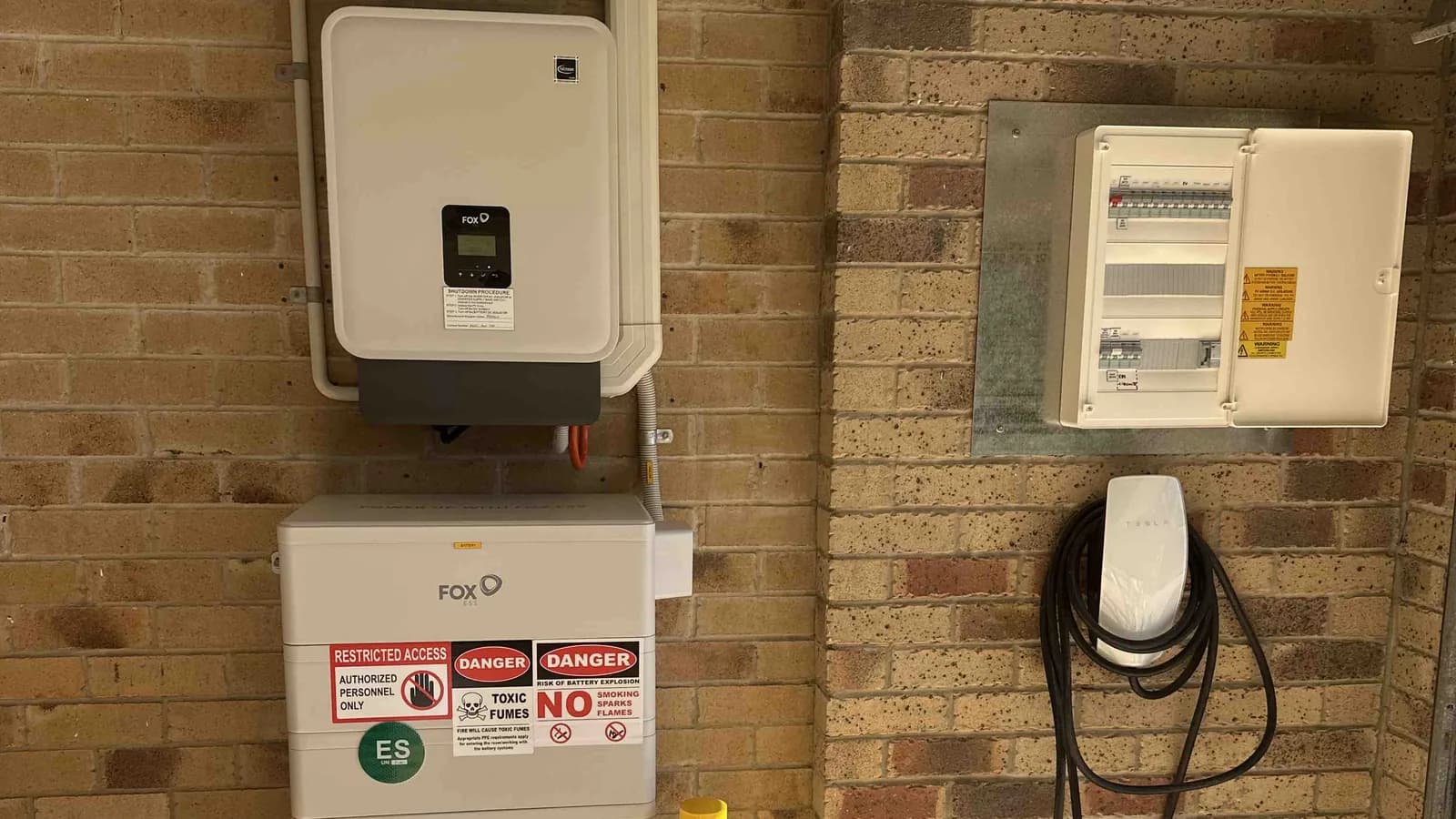
Where you genuinely can save money is on the hardware. You do not have to buy the charger from the electrician who installs it. We install any brand, including a unit you bought online or from the car dealer: Tesla Wall Connector, Zappi, Wallbox, Fronius Wattpilot, Ocular, Sungrow, Fox ESS and the rest, single or three phase. The install is the same electrical job either way, so shop for the charger on its merits and spend the savings on getting the circuit done properly.
Why fixed price online quoting actually works for this job
Most electrical work is hard to price without a site visit. EV charging is the exception, because the whole job hangs on a handful of knowable facts: a photo of your switchboard, a photo of where the charger will go, the rough distance between them, and whether your supply is single or three phase.
With those answers, an experienced installer can commit to a fixed written price with confidence, which is why fixed price online quoting for EV chargers has taken off. No one has to burn an afternoon on a quote visit, and you get certainty instead of an estimate that grows later.
This is exactly how we run EV charger installs at Nuvolt: answer a few questions online, send the photos, and get a locked in fixed price for a compliant installation. If your situation is unusual, the photos tell us, and we say so up front rather than surprising you on the day.
Smart chargers, tariffs and charging on sunshine
Buy a smart charger. The price difference over a dumb charger is small, and the capability difference is enormous. Look for OCPP support, the open standard that lets the charger talk to apps and energy systems without locking you into one vendor forever.
The first win is scheduling. Electricity tariffs increasingly reward off peak charging, and several retailers now offer EV specific plans with very cheap overnight windows. A smart charger fills the car in those windows automatically, and the running cost difference against peak time charging is substantial over a year.
The second win is solar diversion. If you have solar, a smart charger can be set to charge mainly or only on excess generation, which turns your midday export into kilometres. If you have panels and an EV, this pairing is the single best energy trick available to a household.
One caution: charger apps and integrations vary in quality. Stick to established brands with OCPP support and local Australian backing, because a charger is a ten year purchase and an abandoned app turns a smart charger into a dumb one.
The paperwork you should receive at the end
When the job is done you should receive certification that the installation was tested and complies with the wiring standards, from a licensed electrician whose licence number appears on your documents. Mine is Lic# 92489, and it is on every certificate we issue.
Keep that paperwork with your house records. It matters for insurance, for warranty claims on the charger, and for the buyer when you eventually sell a home with charging already installed, which is quietly becoming a genuine selling point.
If a quote does not mention a dedicated circuit, a load assessment or certification, it is not a comparable quote, whatever the price says. If you want the compliant version priced for your actual house, our online fixed price EV charger quote takes a few minutes.
Common questions
How much does it cost to install an EV charger at home in Australia?
Straightforward single phase installs of a quality 7 kW charger, hardware included, commonly land between $1,500 and $2,500 in the current market. Long cable runs, three phase chargers and switchboard upgrades push jobs higher. Photos of your switchboard and mounting spot are enough for a firm fixed price.
Can I install my own EV charger in Australia?
Not a wall mounted one. A hard wired charger on its own circuit is fixed electrical wiring, which by law must be done by a licensed electrician in every Australian state, and a DIY install puts you outside the manufacturer's installation conditions. The only self install option is the portable charger that came with the car, plugged into an existing power point.
Can an electrician install a charger I bought myself?
Yes. We install any brand of EV charger, including one you already own or bought online or from the dealer: Tesla Wall Connector, Zappi, Wallbox, Fronius Wattpilot, Ocular, Sungrow, Fox ESS and others, on single or three phase. The electrical work is the same job either way, so buying the charger separately is a legitimate way to save.
Can I just charge my EV from a normal power point?
You can, slowly, using the portable charger at around 10 amps, adding roughly 10 to 15 kilometres of range per hour. It suits low mileage drivers as a stopgap. A dedicated 7 kW charger is several times faster and, importantly, runs on its own properly protected circuit rather than sharing one with the household.
Do I need three phase power for a home EV charger?
No. Single phase supports 7 kW charging, which fills almost any EV overnight and is all most households ever need. Three phase enables 11 or 22 kW, but many cars cannot accept AC charging that fast anyway. Check your vehicle's onboard AC charging limit before paying for a bigger install.
Will my switchboard need upgrading for an EV charger?
Sometimes. The charger needs a spare way, appropriate protection and enough supply headroom. Modern boards usually cope; older boards may need work first, and load management can solve marginal cases by throttling the charger when the house is busy. A photo of your board answers this before you spend anything.
What is an OCPP smart charger and is it worth it?
OCPP is the open standard that lets a charger work with different apps and energy platforms rather than one vendor's ecosystem. A smart charger schedules charging into cheap overnight tariff windows and can charge from excess solar. The small extra cost typically pays for itself quickly in running cost savings.
Can my EV charger use my solar power?
Yes, with a smart charger configured for solar diversion. It watches your export and steers charging into your excess generation, so the car fills on sunshine instead of grid power. If you already have solar, this is the strongest reason to choose a smart charger over a basic one.
Ask us about your place
Tell us what you have and what you are after. You get a written quote from the licensed contractor who does the work, and we reply within 2 hours during business hours. If it is urgent, call 0494 826 740.